Vibe Producing: When Anyone Can Make a Track, Who's Actually Making It?
Dr. Dre says only uncreative people fear AI. Suno just went legit. What vibe producing means for producers and listeners, and why Potato.exe's sessions matter.
- Reading time
- 14 MIN
- Category
- AI & MusicBehind the Label
- Logged
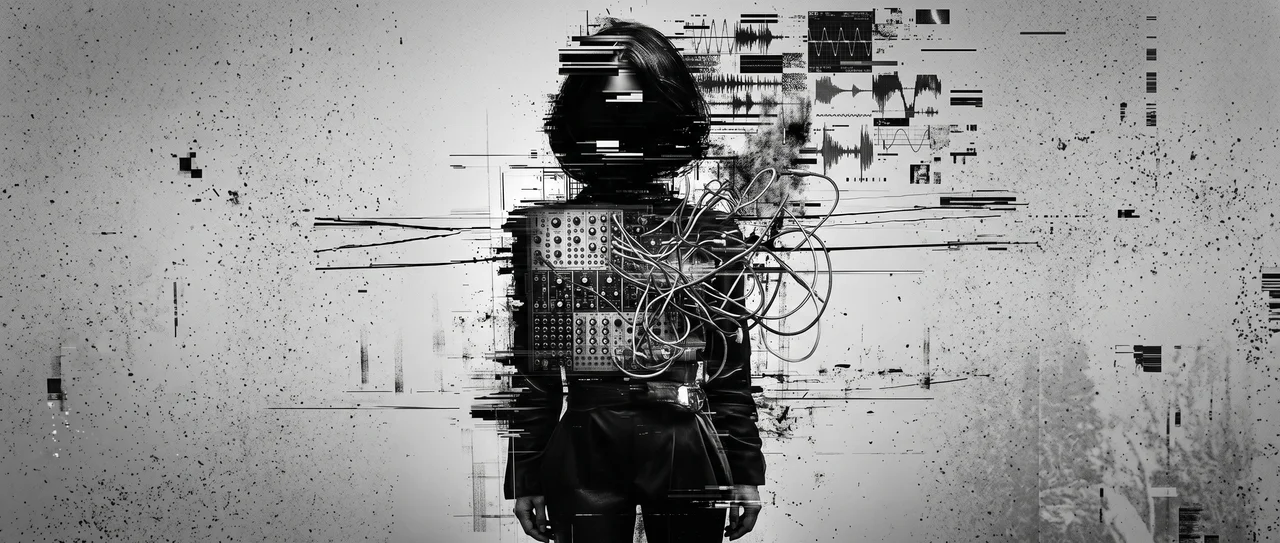
"Vibe coding" started as a programmer's joke in early 2025. Describe what you want to an AI, let it write the thing, stop checking every line. Go with the vibe. It didn't stay in software. The word leaked into everything, and music caught it worst.
Vibe producing is the same move. You don't program the drums. You don't design the patch or ride the filter. You describe a feeling, a reference, a genre, and a model hands you something finished. You react, steer, regenerate. The execution moves from you to the system.
I run a label. I make music as enabl.ed. I'm not writing from the outside, and I'm not here to tell anyone to stay off the tools. I do have strong feelings about it, and they're mostly not the ones people expect.
Dr. Dre vs. Ice Cube: the argument every producer is having
The man who built the sound of West Coast hip hop on drum machines and samples sat across from the guy he made Straight Outta Compton with and told him AI is the future. Ice Cube didn't nod along.
It's the most honest version of this fight I've seen this year, because neither of them is a tech guy. They're producers and writers arguing about what counts as making something.
Dr. Dre and Ice Cube go back and forth on AI. The conversation comes from Listen And Laugh, the new podcast Ice Cube hosts with Mike Epps, where Dre was the first guest.
Here's the setup. Back in August, Dre told the New York Times he's embracing AI, and that the people who see it as a threat are the ones who have trouble creating. Variety's write-up has him describing how he actually uses it, as a way "to see what it would do with what I just did." In the same interview, Jimmy Iovine called out "closet AI producers" who use the tools and won't admit it, and Dre agreed. The internet did not take it gracefully.
Then in early November he doubled down on Ice Cube's new podcast. Dre said only uncreative people would be mad about AI, that Cube was thinking about yesterday, and that you either get used to it or get left behind. He talked about building AI voices and being "in complete control of this AI person that I created." He compared it to sampling, which was controversial once too.
Cube pushed back the whole way. His point: a synthetic Whitney Houston should never get the respect of the real one, and sampling still took human skill and human choices. Mike Epps mostly cracked jokes about being on the short bus for not liking AI. They ended up agreeing to disagree.

Our scene is about as far from Dre's world as you can get. Nobody on Clean Error is cutting a hit for a stadium. But this argument isn't really about genre. It's about authorship, and every producer reading this is on one side of that table or the other.
My take: Dre is right about the tool and wrong about the people.
Listen to how he describes using it. He makes something, then asks the machine what it would do with that. That's directing. He's Dr. Dre. He has forty years of ears telling him which of those results is garbage. Of course AI isn't a threat to him. It's a mirror he gets to argue with.
Hand the same tool to someone with no ears, though, and it isn't a mirror. It's a substitute. That's where his "only uncreative people are worried" line falls apart. The worry isn't that AI will out-create Dre. The worry is that the room fills up with so much finished-sounding music that the people doing the actual creating can't be heard. Cube's sampling point lands harder than Dre gave it credit for. Sampling was controversial, sure. But you still had to find the record, hear the two bars nobody else heard, and flip them into something new. That skill was the art.
Meanwhile, Suno went legit
Sources: Music Business Worldwide, MBW on v6, The Rundown.
While Dre and Cube argued, the industry quietly stopped fighting and started licensing. Warner settled with Suno last November. In September, Suno launched its v6 models, developed with Warner, BMG and Believe as partners, with a share of revenue flowing back to rightsholders. The old models were retired the same day. There's a free v6-mini, a flagship v6 for paying users, and a "v6-wild" model built for weirder exploration. Paying subscribers are told they own what they generate.
It isn't all smooth. Suno started capping downloads at 20 a month on Pro and 60 on Premier, older songs included. Universal and Sony are still suing, and in a September court filing Suno admitted it pulled YouTube audio to train earlier models while disputing liability. Round Hill filed its own suit in August. And the next phase is already planned: opt-in deals where fans pay to remix their favorite artists' catalogs through Suno.

Read that last part again. Fans paying a generator to remix artists. The biggest labels in the world are now building the machine instead of suing it. And AI acts are already charting. An AI country project hit number one on Billboard's Country Digital Song Sales last November.
So the question "should producers use AI" is already answered by the market. The question that's left is the only one that ever mattered. Who's making the decisions?
Finished-sounding isn't finished
The floor dropped. Someone with no idea what gain staging is can produce a track that sounds radio-ready. That isn't a rumor, and pretending otherwise just makes producers look scared.
But "sounds finished" and "is good" were never the same claim. Polish used to be expensive. It took years of learning compression and arrangement and how a kick sits against a bass. Now polish is free. And when something's free, it stops telling you anything.
Polish used to be proof of effort. Now it's the default setting.
That's where "AI slop" comes from. Not from the tools being bad. From the gap between how finished a track sounds and how little anyone decided about it.

Directing versus accepting
The real defense of AI in production is narrower than Dre makes it sound. When an experienced producer uses a generative tool, they aren't accepting the first output. They treat it like a session player or a modular rack. Something with its own personality that needs to be pushed, boxed in and edited against a sound that already exists in their head.
- Prompt, generate, keep what sounds cool
- Target is "a vibe," so anything close counts
- Can't say why take five beat take four
- Output lands in the middle of everything the model heard
- Generate, chop, resample, rebuild
- Target is a specific sound you're chasing
- Can explain every rejection
- Output pulled somewhere the model wouldn't go alone
The tool can be identical on both sides. The person isn't.
"Intention" is the word everyone reaches for, and I don't trust it much. You can't hear intention. Anyone can claim it, Dre included. So here's a test I actually believe in.
If the answers are yes, I don't care what software made the raw material. If they're no, a human didn't really produce the track. A human ordered it.
Why this hits IDM in a strange place
IDM always wanted to sound inhuman. That was the thrill in 1994. A kid with a tracker making something that sounded like it came out of a machine nobody had built yet. Autechre, early Aphex, the whole braindance lineage. Machine music made by people obsessing over every step in the sequencer.
Now the machine exists. And the irony is it doesn't sound alien. It sounds average.
Generative models are trained to land on the most likely next thing. That's the opposite of what this music does. IDM lives at the edges, in the fill nobody would program, the snare that drifts ten milliseconds late on purpose, the melody that resolves somewhere wrong and stays there. Ask a model for "glitchy IDM" and you get the average of glitchy IDM. Stutters in the expected places. The smoothest possible version of broken.
At Clean Error we talk about error as something generative. A mistake that becomes the discovery. AI has errors too, but they're a different species. Averaged errors, artifacts nobody chose and nobody kept on purpose. A glitch matters when someone heard it happen and decided to build around it. Grier Edward Carson put it well in our ERR100 interview: the material might be trying to tell you something, and you leave space for that. Leaving space is a decision. A model doesn't leave space. It fills it.
Potato.exe and the ERR_SESSION series: what a real generative process looks like
Generative music isn't new and it isn't the enemy. People have been building systems that surprise them for decades. The difference is who built the system, and how well they understand it. The best example I have of that right now is on our own label.
Sean Wood records as Potato.exe. Clean Error doesn't run an open demo pool. The roster is small and I mostly scout. Wood's submission was the exception, and the reason was simple: I heard the Bandcamp material and it already sounded like something we were trying to say. Raw, long-form, built in Native Instruments Reaktor, leaning hard into improvisation.
Vol.1 landed one catalog number before ERR100. Vol.2 followed right after it.
How the sessions get made
The title isn't decoration. These are sessions, not songs. In a conventional production, most of the sound design gets locked before the arrangement starts. You build a patch, render it, then move the parts around a timeline. Wood flips that. His Reaktor patches stay generative while he records, so tempo drift, filter movement and the way the voices interact get captured as they happen. Nothing is sequenced afterward to make it tidy. The structure is closer to a documented improvisation than a composed piece.
A simplified view of the ERR_SESSION approach, as a listener and label owner hears it.
The drums are where you hear it first. Instead of a fixed pattern with fills on top, the rhythm elements are patched to modulate each other. A sequencer's step count or gate length gets nudged by an LFO, or by a second sequencer running at a division that doesn't lock to the first. So the groove drifts instead of repeating. There's clearly a grid underneath, and it still never feels quantized. You can hear the machine's logic. It just won't sit still.
The textures work the same way. Reaktor isn't a fixed instrument, it's a sandbox. So instead of pulling a preset and turning a cutoff, Wood routes signal through chains where the modulation sources are unstable themselves. That's a very different kind of randomness than a randomize button. A randomize button picks from a fixed range of outcomes. A self-modulating patch can wander somewhere its builder didn't see coming, and the whole skill is keeping that wander interesting instead of letting it fall into mush or silence.

How to listen to them
Don't wait for a drop. Listen for drift. Pick one element, a hat pattern or a bass voice, and follow it for a few minutes. Notice when it starts leaning against the rest of the patch, and notice the moment Wood reaches in and pulls it back, or decides to let it go. Those decisions are the composition. They just happen in real time instead of on a grid.
The long durations aren't indulgence either. Complex textures need room to unfold. A pattern that sounds like a loop at minute two can be something else entirely by minute nine, because the modulation underneath it has kept moving the whole time.
Why it matters to Clean Error
This is the part I find magnificent. Every label in this genre says it loves the glitch. Most of the time the glitch gets added at the end, an effect on a bus, a stutter plugin on the master. In the ERR_SESSION series, the error is the process. The instability is built into the instrument, it happens live, and what survives is whatever Wood decided to keep. That's Clean Error's whole philosophy running in real time.
It's also the clearest answer I can give to the vibe producing question. Wood's system and a prompt-based generator are both chasing unpredictability. They're the same raw material. But to get where he gets, Wood has to understand signal flow, voltage ranges, and what happens when you feed an output back into its own input. He built the machine. He knows its moods. He keeps wrestling it back into shape for the length of a session. Nobody handed him a tool that already decided what "good" sounds like.
And because they're numbered sessions, they work like a logbook. Vol.1 and Vol.2 are snapshots of a system that keeps changing between recordings. Patches get rebuilt and new routings show up. Things that worked in one session get broken on purpose in the next. Vol.3 is on the way, and I don't know exactly what it'll sound like. Neither does Wood, which is the point of the series. That uncertainty, owned by a person who built the conditions for it, is the opposite of vibe producing.
Native Instruments on patching in Reaktor Blocks, if you've never opened the program the ERR_SESSION series comes out of.
Does the surprise belong to the system or the person?
This is the question underneath the whole panic, and underneath the Dre and Cube argument too. When a system produces something surprising, is the surprise the system's, or the person's who set it up to surprise them?
Modular synthesis answered a version of this decades ago. A patch that self-oscillates isn't "written" by its builder in the old sense, but it doesn't happen without them choosing the modules, the routing and the limits. Credit belongs to both, and splitting it cleanly is the wrong exercise. What you can split is competence. Did the person know enough to put the system somewhere interesting, or did they get lucky once?
Same with sampling, which is where Cube had Dre. Grier makes tiny megamixes out of other people's recordings and turns them into original compositions. John Oswald built plunderphonics out of famous records. Nobody serious says that isn't music, because someone made a thousand decisions about the material. AI-generated audio can be raw material in exactly that way. Chop it, resample it, wreck it, rebuild it, and it's a source like a breakbeat. What I won't call production is typing a sentence and uploading what comes back.
Where Clean Error stands
I've been open that Clean Error uses AI as an assisted creative tool on the visual and world-building side, with human-led planning and direction behind it. I've taken heat for that and I'm not hiding it. Transparency was the point. Iovine's "closet AI producers" exist. I'd rather not be one.
The bar for the music is the test above. Someone has to be steering, and they have to be able to tell me how. That's a big part of why there's no open demo pool. I scout people and talk to them. I want to hear how they got somewhere, not just where they landed. When the biggest labels in the world are licensing generators and fans are about to pay to remix catalogs, the job of a small label shifts. Releasing music used to be the hard part. Now the hard part is saying no to almost everything and meaning it.
Curation was always one thing a label did. It's turning into the main thing.
For the listeners
You don't need to become a detective. A few habits help, though. Buy from Bandcamp pages with actual people behind them. Read the credits. Notice when a track sounds expensive but tells you nothing, and notice when something sounds slightly wrong in a way that keeps pulling you back. That second feeling is usually a person.
Grier said something else in that interview. Anything you can fully understand after one or two listens isn't very interesting. AI is extremely good at the first-listen track. The music this scene was built on is the opposite, and it needs listeners willing to sit with a nine-minute Potato.exe session and hear where it moves.
The short version
"Vibe" isn't the problem. Treating taste as optional is. Dre can use AI because he has the ears. Cube's worried because most people using it don't. Both of them are describing the same thing from opposite chairs. AI tools and Reaktor patches reward the same person: someone who knows what they're listening for and can tell, fast, when they haven't found it yet. The averages will keep getting smoother. The edges will stay where they've always been.

Everything else is noise wearing a good mix.
Sources and further reading
- Stereogum: Dr. Dre doubles down on Ice Cube's Listen And Laugh podcast
- Variety: Dr. Dre says only people who have trouble creating see AI as a threat
- IBTimes: Dre and Iovine on "closet AI producers"
- Music Business Worldwide: Suno v6 launches with WMG, BMG and Believe
- Music Business Worldwide: Warner settles with Suno
- The Rundown: Suno v6, download caps and paid fan remixes
- Opus: AI music news, April 2026
- Potato.exe: ERR_SESSION Vol.1 · ERR_SESSION Vol.2
- ERR100: Grier Edward Carson on F A I L U R E (interview)
- ERR100: F A I L U R E